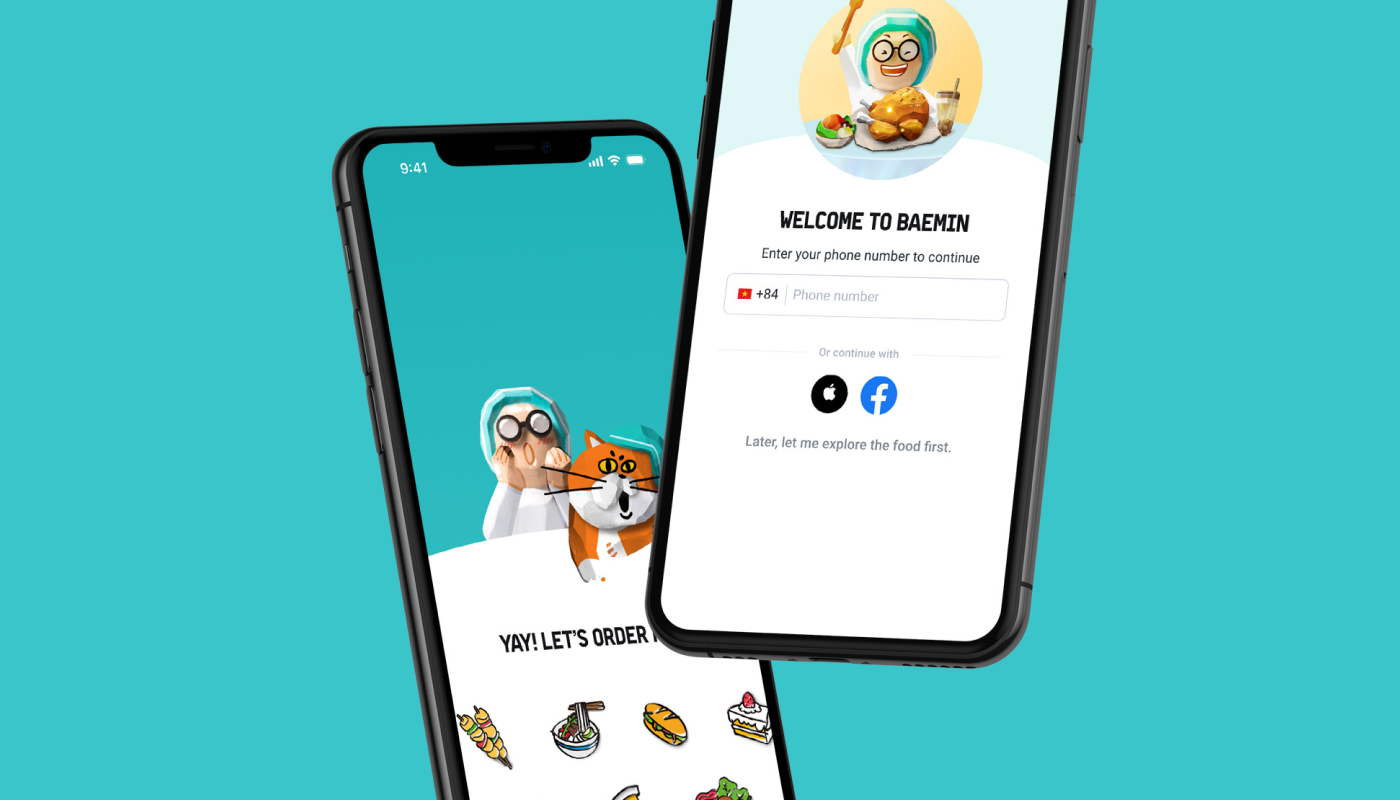
As the Product Design Lead, I was responsible for shaping the entire design approach for BAEMIN’s new Home experience. I worked closely with our CEO, business stakeholders and cross-functional teams to understand the realities of operating a low margin food delivery business. This meant studying the business model, analyzing the ongoing problems, understanding our revenue streams and identifying the user segments that could drive sustainable growth. I combined qualitative research, quantitative analysis, behavioral data and competitive insights to build a complete picture of user needs and business constraints. From there, I designed a solution that balanced user experience with operational efficiency and long-term strategy. My goal was not only to improve usability, but also to create an experience that could support BAEMIN’s path toward profitability in a highly competitive market.
BAEMIN was a fast-growing food delivery platform that operated in Vietnam for around five years before closing its business. Competing in a crowded market, the brand stood out with its playful identity and strong local presence. During its operation, our team focused on creating a deeply personalized user experience to strengthen loyalty and position BAEMIN as a top-of-mind choice for food ordering.
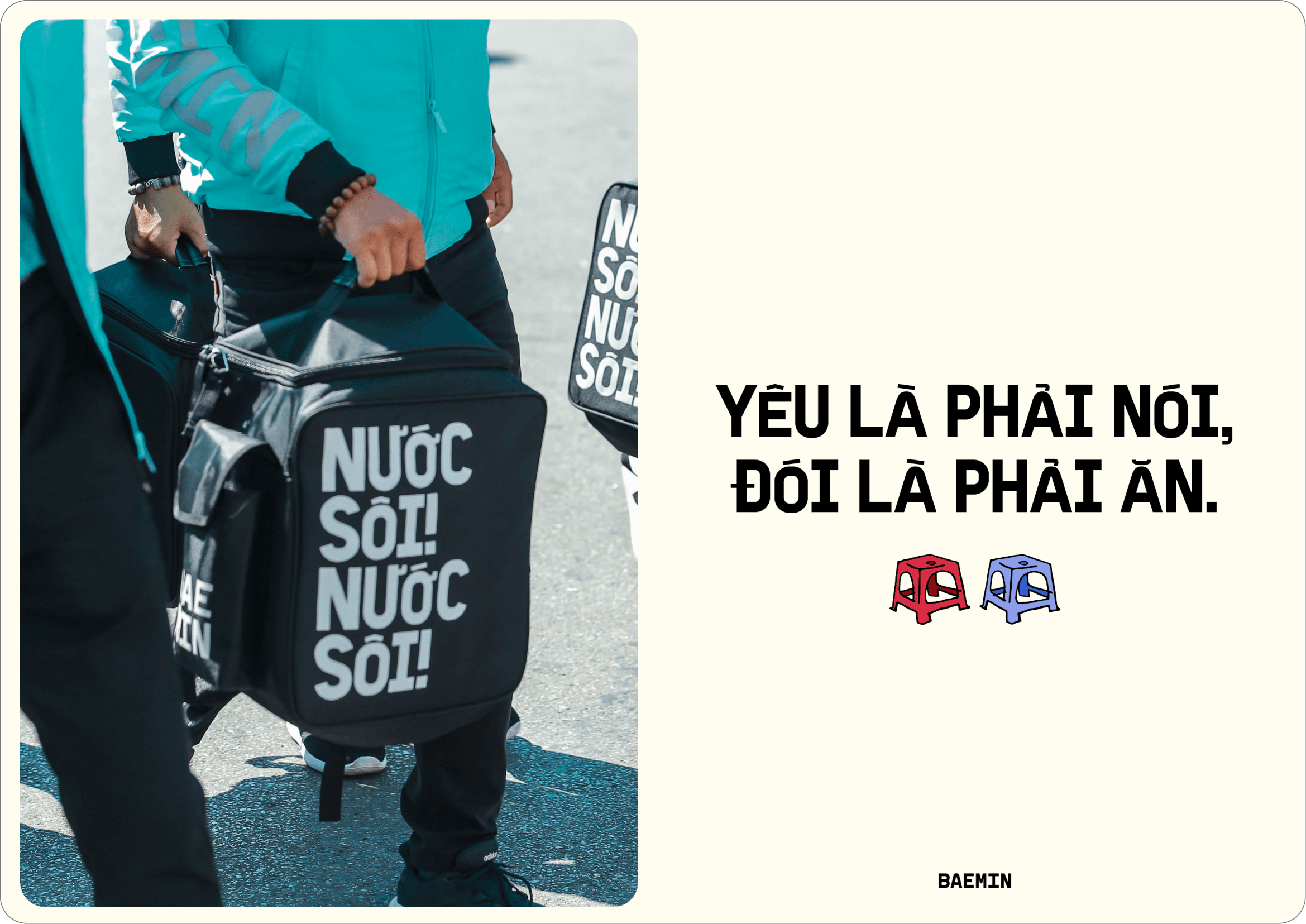
To enter Vietnam’s food delivery market, BAEMIN invested heavily in research to understand user behavior and identify the right entry strategy. The brand positioned itself to appeal directly to young customers, early adopters who were eager to try new digital services. With its distinctive mint color and memorable typeface, BAEMIN quickly stood out and built strong brand recognition. Combined with aggressive discount campaigns and highly creative marketing initiatives, BAEMIN rapidly grew its user base and captured nearly 30% of the market share during its peak.
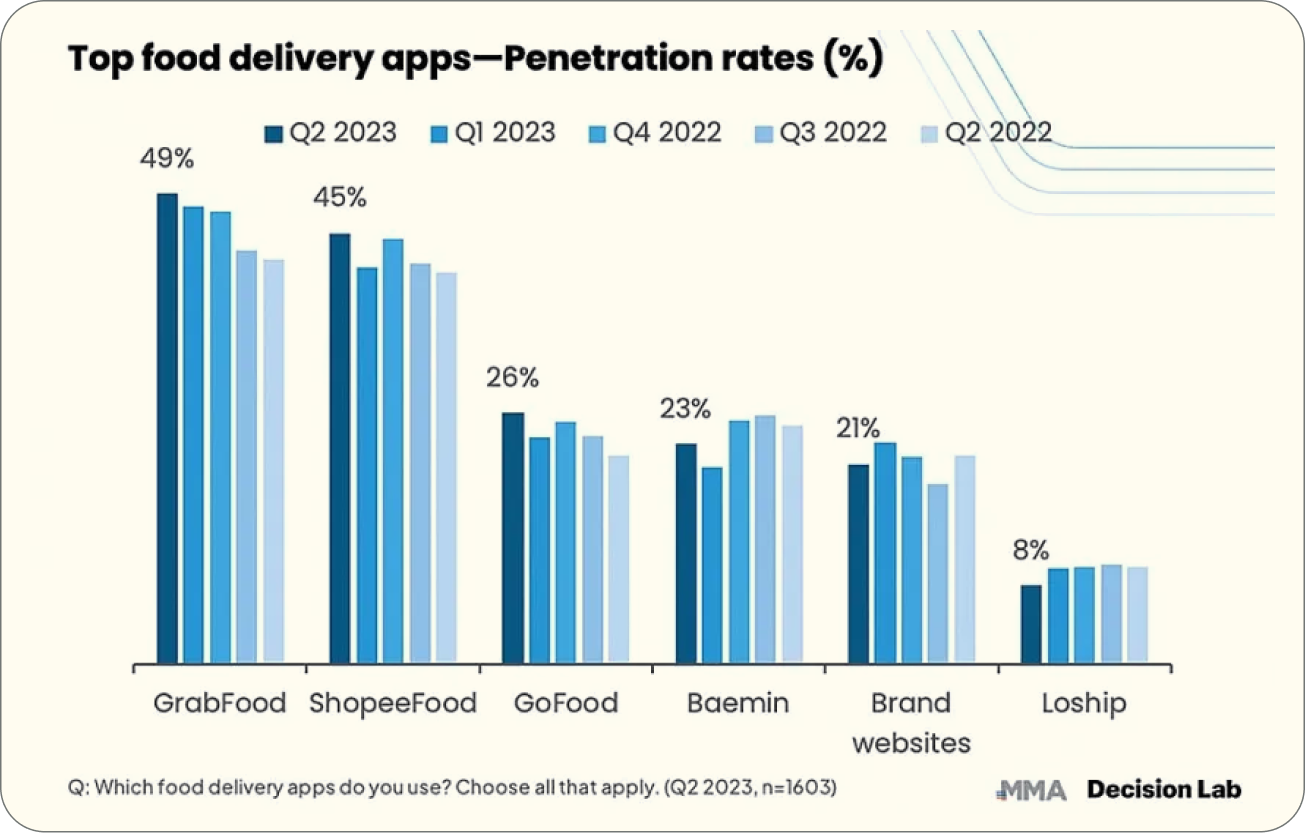
However, if we look back at 2019 and 2020, most startups in the region were still chasing market share and rapid user growth. In that environment, pushing discount codes to acquire users and relying on continuous funding seemed like a reasonable strategy. Everything changed when COVID-19 hit and the global economy was severely impacted. Investors started tightening capital to protect cash flow, and startups that depended heavily on external funding ran into serious difficulties. This was when we realized that discount-driven growth was a risky play and not a sustainable path forward.
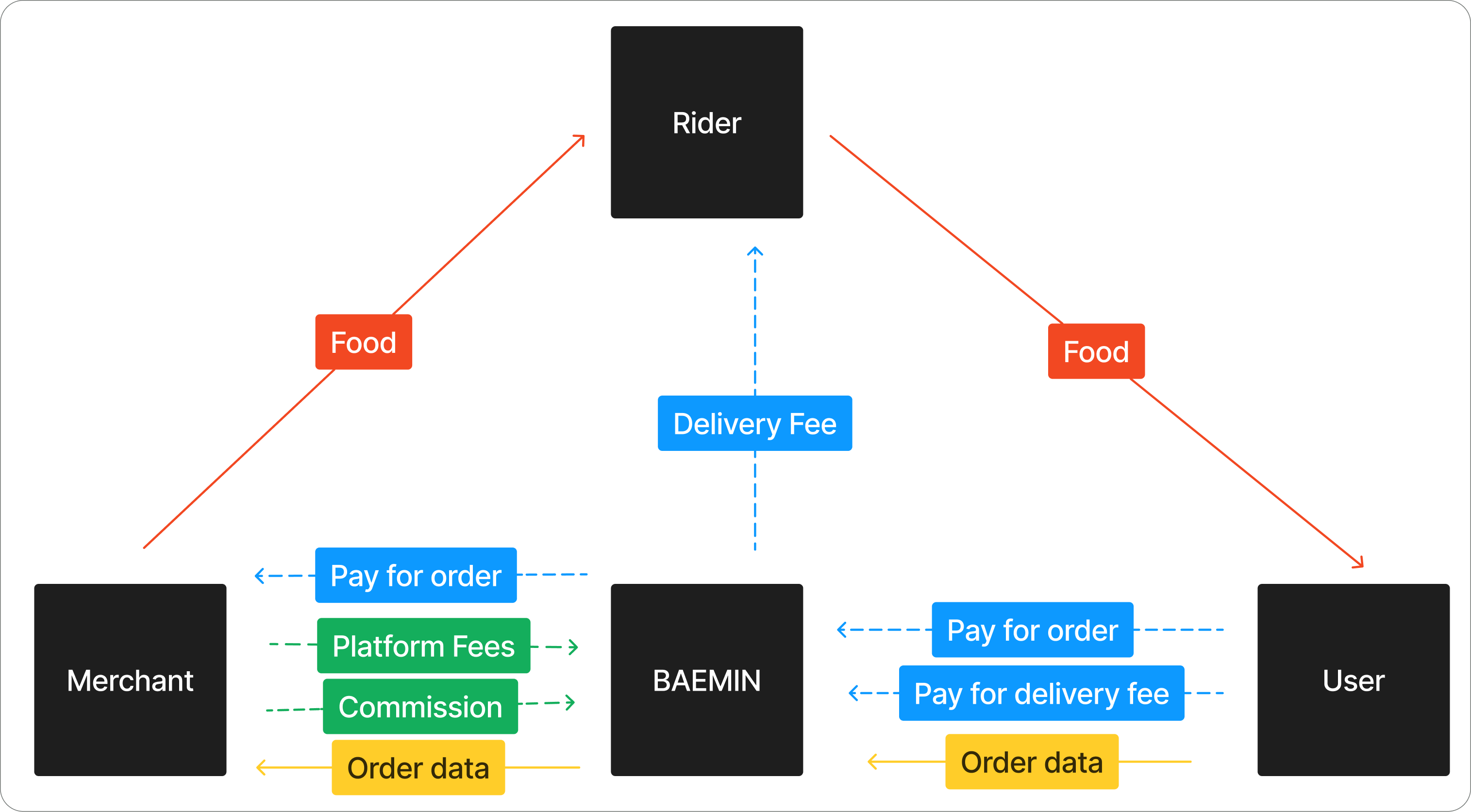
The core challenge of BAEMIN’s business model lies in its very thin profit margin. Most of the revenue comes from commissions collected from merchants, but this amount is relatively small. A typical self-order in Vietnam usually falls somewhere between 60,000 and 80,000 VND, which the Average Order Value (AOV) might be around 70,000 VND. With such a low AOV, it is difficult for the platform to generate meaningful revenue, especially after deducting operational costs like rider incentives, marketing, and platform maintenance.
Increasing AOV is not something the platform can control in the short term because it depends heavily on the economy and the average income of users. That leaves the platform with only one main lever: increasing the order frequency in a week or a month. This leads to an immediate conflict. To stimulate more orders, BAEMIN has to offer discounts. But the more discount codes are used, the higher the cost per order becomes. This is one of the reasons why the food delivery model in Vietnam is so hard to scale sustainably.
Because of these pressures, BAEMIN faced two clear objectives: reduce cost per order and increase revenue. Both of these were necessary to move EBITDA closer to breakeven and eventually turn positive. The team explored two main directions.
Compared to other platforms, BAEMIN had a strong advantage in payment flexibility. The app supported a wide range of payment methods, which allowed BAEMIN to partner with multiple banks, e-wallets, and payment providers. Through these partnerships, the platform could offer users a steady stream of coupons funded by third-party providers instead of paying for all promotions itself. This helped reduce the overall cost per order while still keeping users engaged.
With a strong brand and a vision to evolve beyond food delivery into a lifestyle platform, BAEMIN expanded into new categories through dark stores model. These stores sold BAEMIN-branded or BAEMIN-sourced products such as cosmetics, stationery, and other lifestyle items. The company also explored home-meal-replacement products by leveraging its existing cloud kitchen network. These initiatives aimed to diversify BAEMIN’s revenue model and reduce dependence on food-delivery commissions.
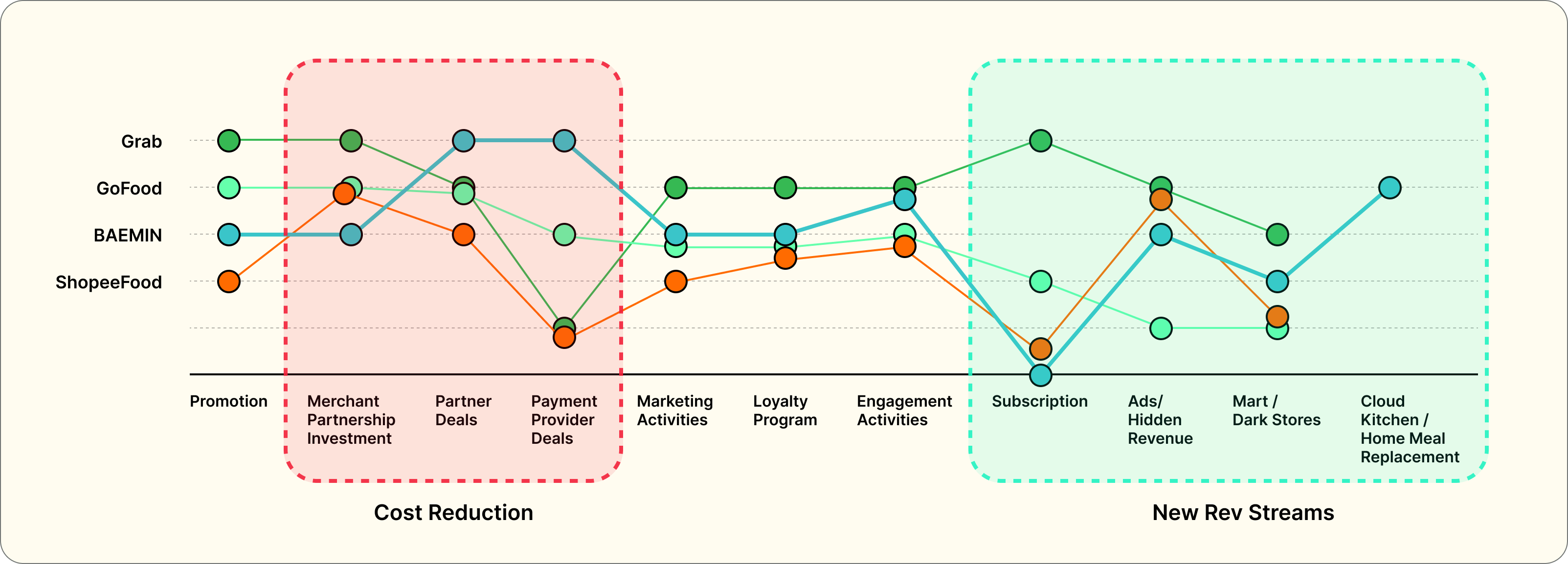
As the Product Design Lead, I was directly involved in cross-functional business discussions, including weekly meetings with the CEO and leaders from other departments. Being part of these conversations gave me a clear understanding of the challenges behind the numbers. This early visibility allowed me to connect business strategy with product opportunities and ensured that every design decision supported BAEMIN’s long-term sustainability.
For the two business goals mentioned above: reducing cost per order and expanding new revenue streams – from a design perspective, this meant focusing on user behaviors that directly influenced these metrics. With a low Average Order Value and increasing promotional spending, driving higher order frequency became the most realistic and impactful path forward.
At the same time, if BAEMIN wanted to grow into new categories like dark stores, cloud kitchens, or lifestyle products, the platform needed a seamless way to introduce these offerings without distracting users from the core food-ordering experience.
Based on the business challenges and design strategy mentioned above, I defined a clear set of goals and measurable outcomes.
Increase the number of orders with fewer promotions applied. This would directly contribute to improving profit margins and reducing reliance on discount-driven growth.
Ensure each user segment consistently finds food options that match their needs. This would help maintain a stable flow of returning users and support long-term retention.
To shape the personalization strategy, I combined insights from user feedback (NPS and CSAT), product analytics, heuristic evaluations, and competitive analysis. These inputs revealed several behavioral patterns and design issues that limited how effectively users could discover the right food.
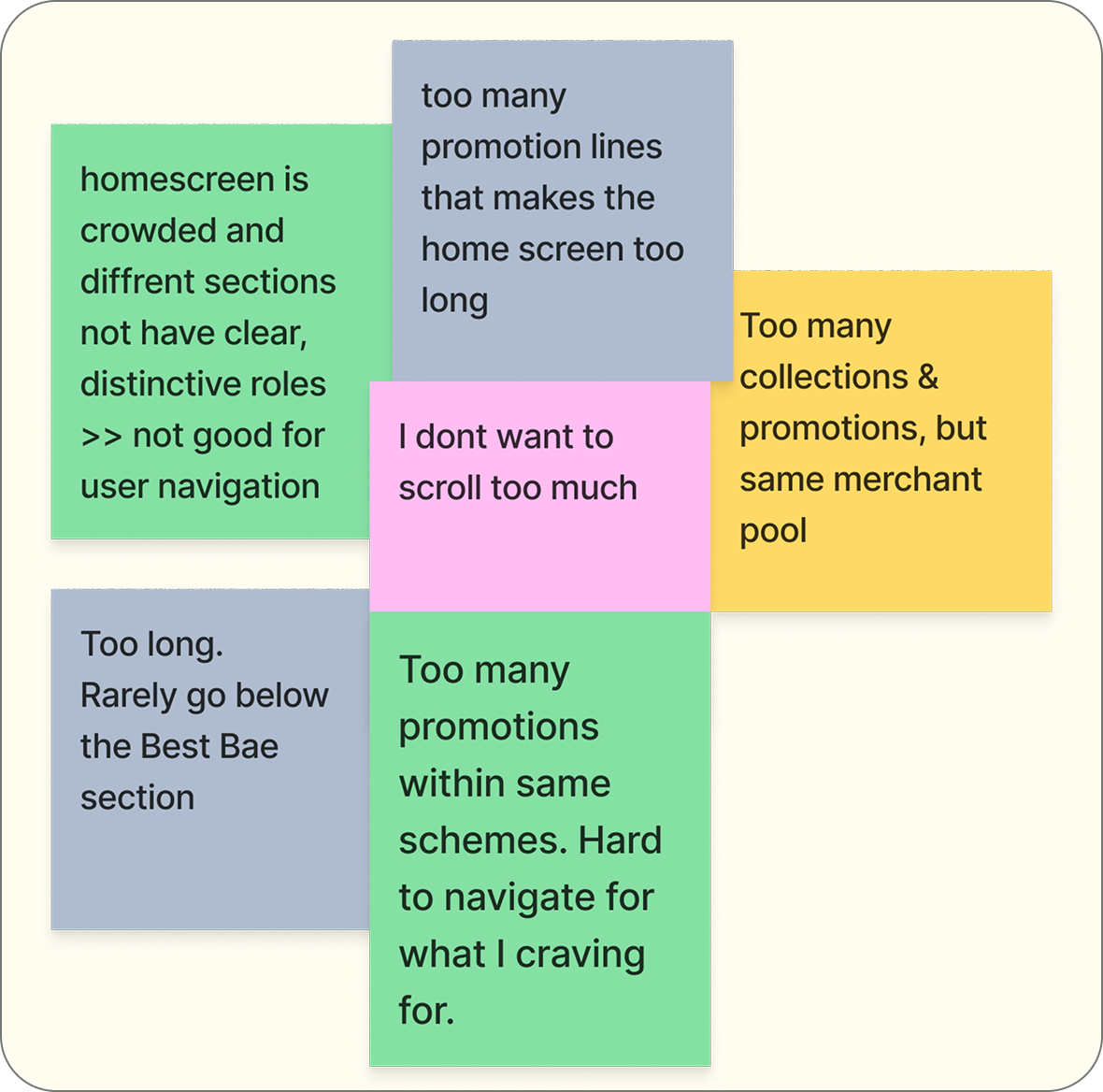
Users reported that:
These insights indicated that the current promo-heavy approach was not supporting the majority of user needs, especially for everyday, low-effort orders.
What users actually select on the Home screen: Data showed that users rely heavily on the Search function, Category Browsing, and Nearby Restaurant to find food. These three sections consistently accounted for the majority of user selections.
.png)
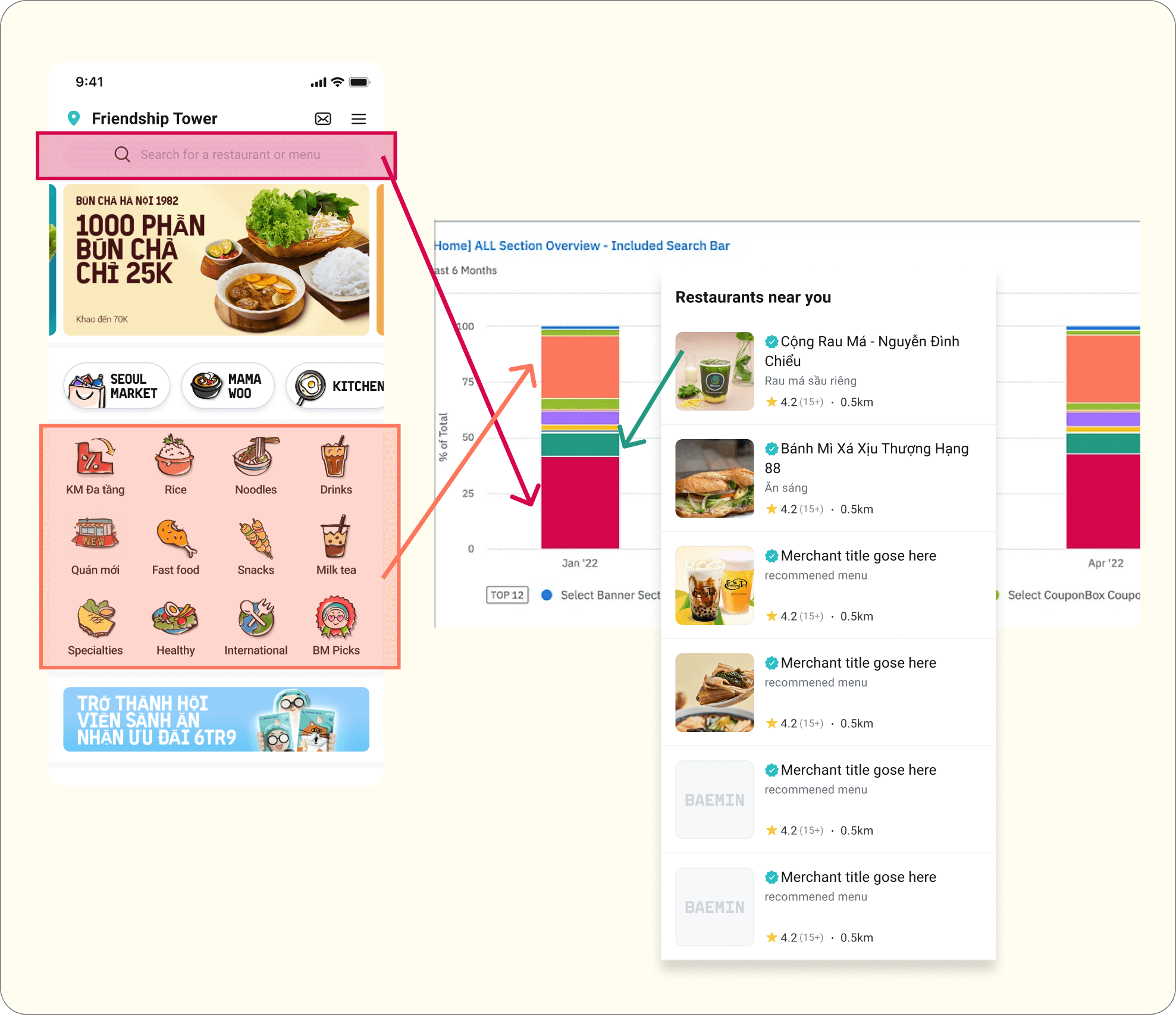
Key issues I identified:

This meant the design was unintentionally reinforcing discount dependency and hiding opportunities for new revenue streams.
What other food delivery apps were doing at the time: Platforms like GrabFood and ShopeeFood (main competitors) relied heavily on aggressive discount collections and price-slashing visuals. Their interfaces were crowded with promo banners, large discount tags, and flash sale modules.
The entire market was highly promotional, which created fatigue for users and made differentiation difficult. This reinforced our belief that a more personalized, need-based discovery experience could become a competitive advantage for BAEMIN.
To build a more meaningful personalization system, we needed to understand that not all users behave the same or value the same things. While promotions were important for some, many users simply wanted to find the right food quickly, without browsing through endless collections.
To build a deep understanding of user behavior, I followed a mixed-method research approach. I began with qualitative in-depth interviews to uncover users’ motivations, attitudes, and decision-making patterns. Then, I quantified these insights through a structured survey to measure how widespread each behavior or need was. Finally, I mapped these attitudinal findings to real behavioral data from BAEMIN’s tracking system, allowing us to validate assumptions, identify gaps between what users say and what they actually do, and form a solid foundation for the design direction.
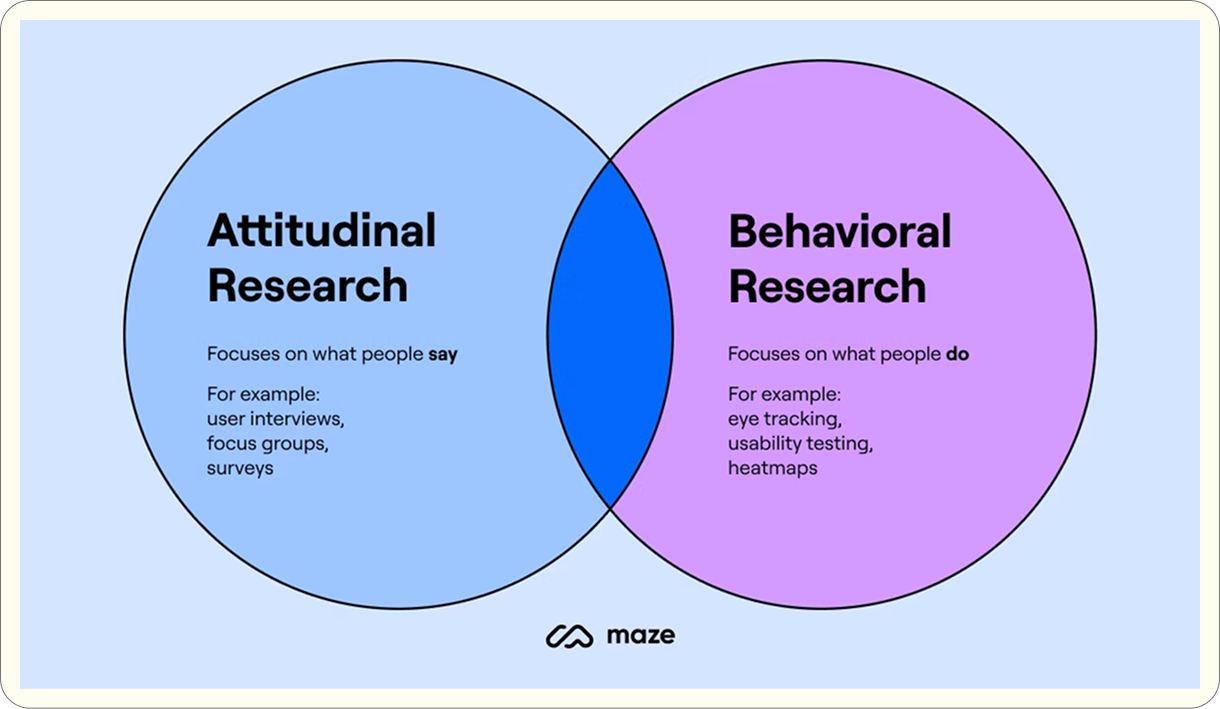

To understand different users’ motivations, goals, and pain points. These sessions helped us identify the thoughts and attitude behind ordering decisions, as well as any unmet needs that our current design did not address.
From our interviews, we identified and group into six core user segments, each with different motivations and decision-making patterns. These insights helped us understand why a one-size-fits-all, promotion-heavy experience could never serve all users effectively.
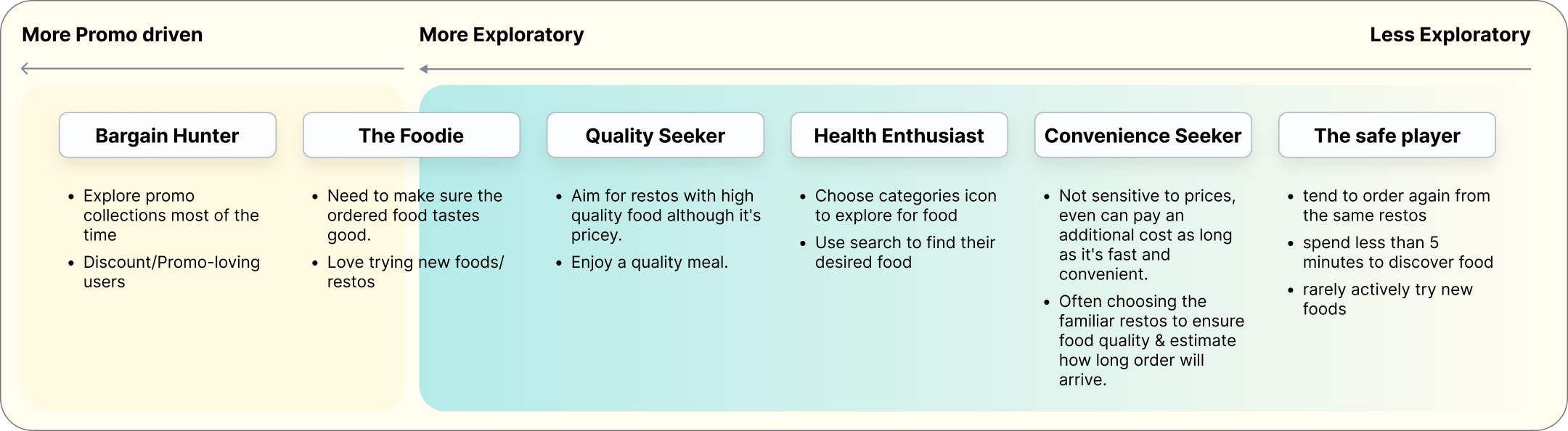
Curious, exploratory, and often driven by mood. They browse multiple options, enjoy discovering new restaurants, and rely on visuals and recommendations.
Highly promo-driven. Their final decision depends heavily on discount availability and the perceived savings on the order.
Prioritizes food quality, freshness, and reliability. They are willing to pay more if they trust the brand or restaurant.
Looks for healthy, low-calorie, or diet-specific options. Their main concern is finding the "right" food that matches their personal lifestyle or restrictions.
Focused on speed and simplicity. They want to place their order as quickly as possible with minimal browsing.
Prefers familiar restaurants and repeat orders because they want to ensure predictable quality. They rarely explore beyond what they already trust.
These segments became the foundation for designing a more adaptive and personalized Home experience that could cater to different user needs rather than forcing everyone through the same promo-driven flow.
Identifying user segments qualitatively was only the first step. To design a scalable personalization system, we needed to understand how large each segment was and whether their real in-app behaviors matched what they said in interviews. This helped us prioritize which segments to optimize for first and how to allocate design effort.
Overlaying these two data sources allowed us to validate assumptions, identify gaps between intention and action, and refine our personalization strategy with confidence.
Bargain Hunter or the heavy-promotion driven user segment is the largest segment, follow with The Foodie, Convenience Seeker and the rest are quite similar in size.
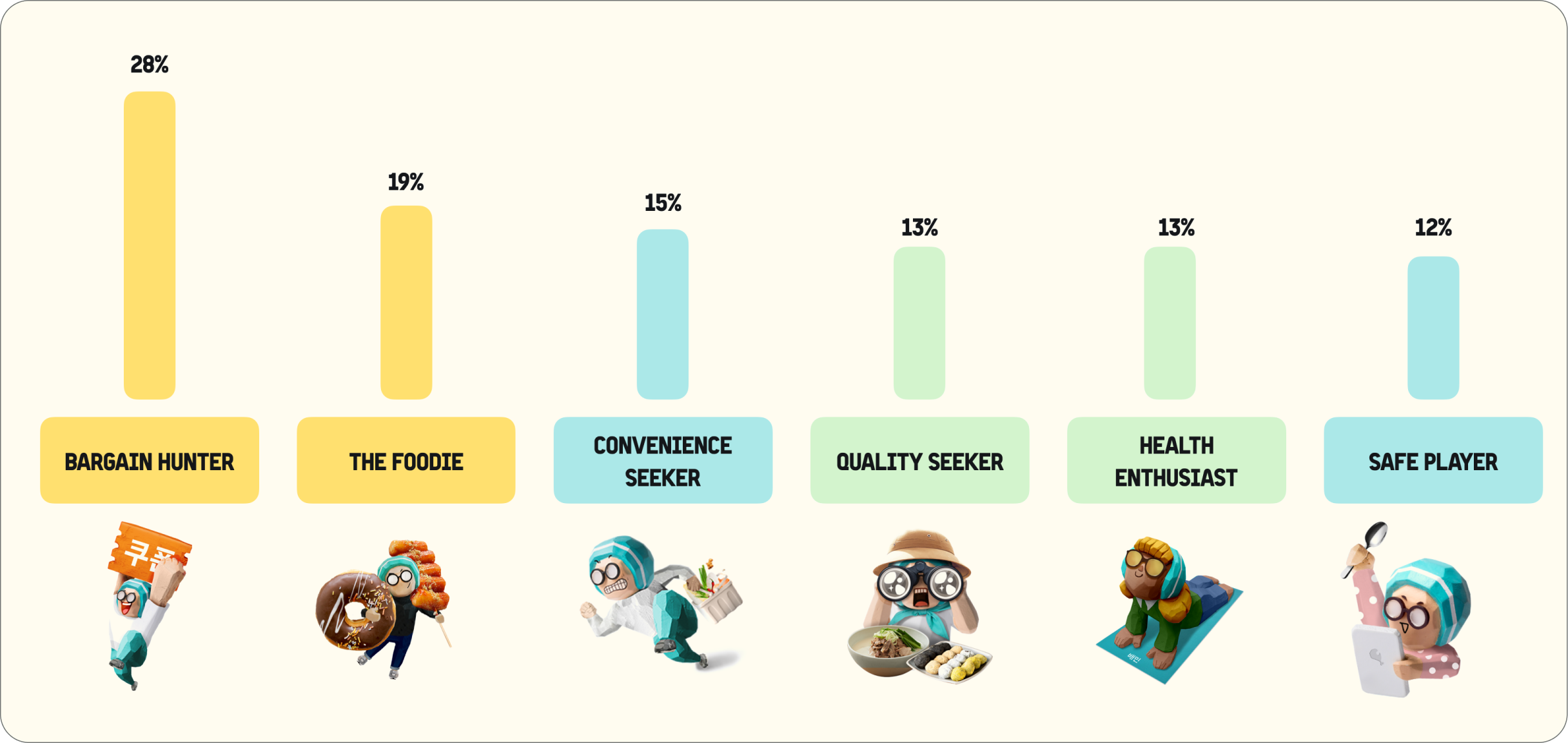
To make sure our segmentation was useful for product decisions, we validated the six user groups against real behavioral data from BAEMIN. The Data Engineer team helped map each users' response to their past orders. This helped us compare what users said with what they actually did in the app.
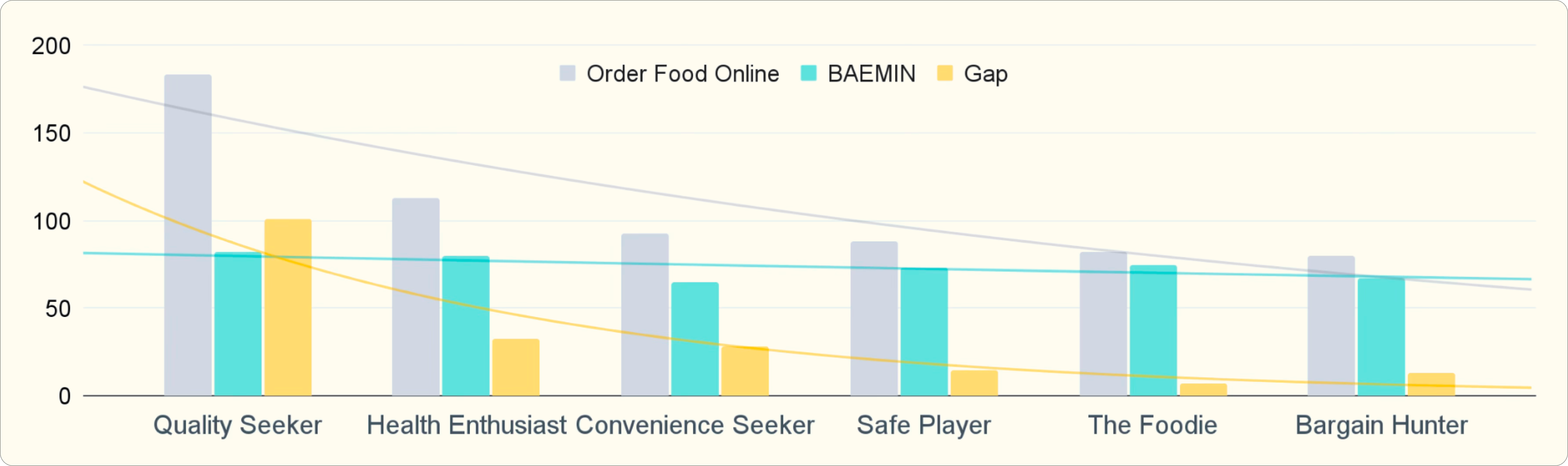
This suggested that the first three segments had clear headroom to spend more if we could help them find the right food more consistently.
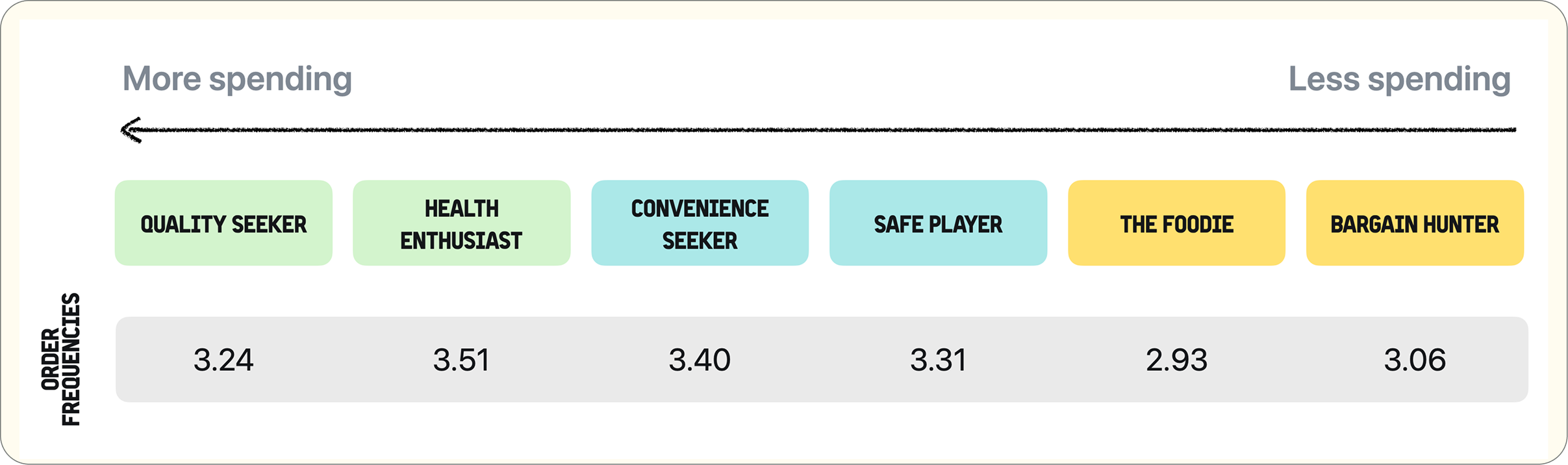
Data also confirmed that Quality Seekers and Health Enthusiasts were among the most valuable segments. They spent the most and had the highest order frequencies across all groups.
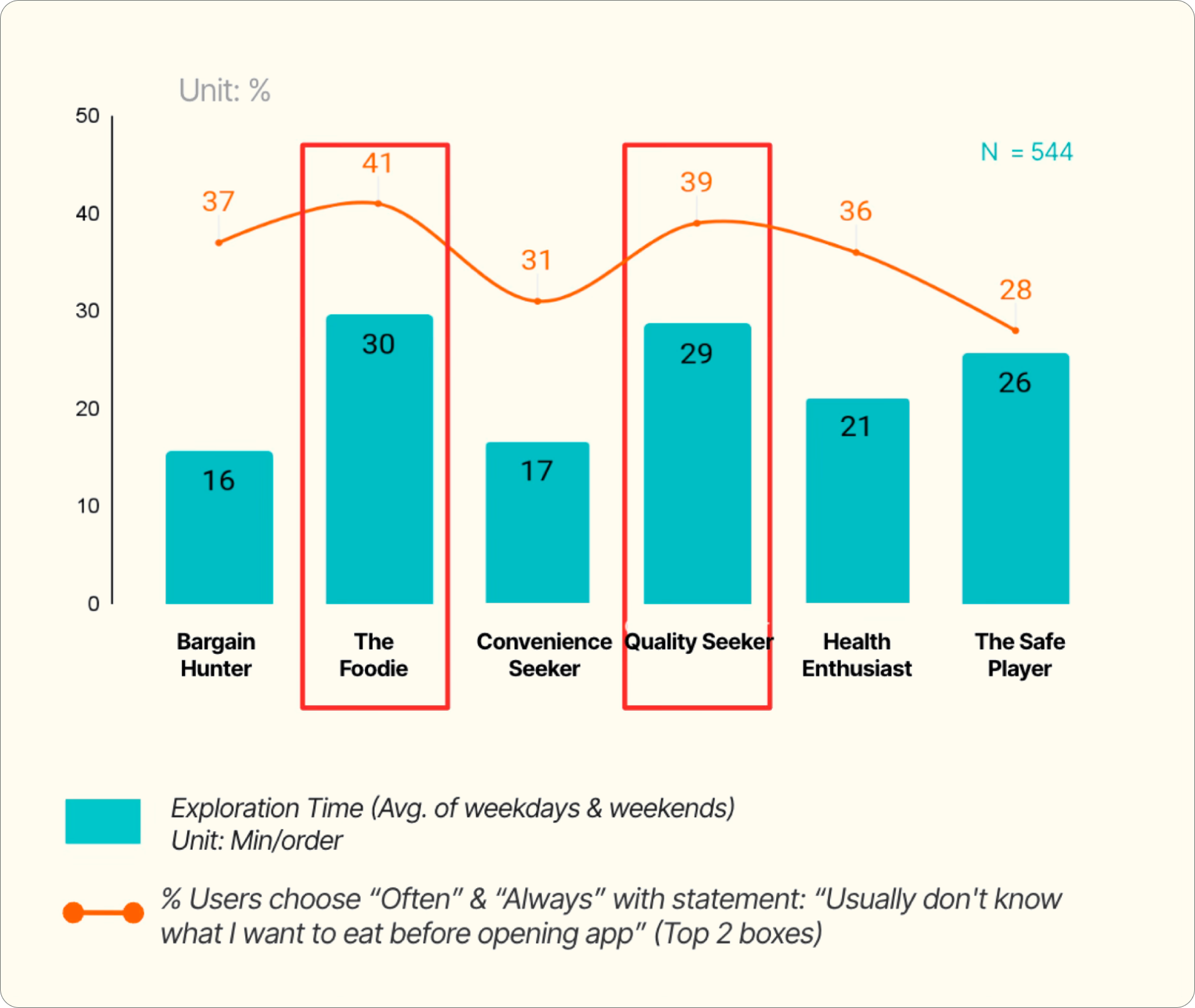
We then looked at how long each segment spent browsing before placing an order. Foodies and Quality Seekers often opened the app without knowing what they wanted to eat. As a result, they spent more time exploring restaurants and dishes and would be more likely to be influenced by visuals, curated food recommendations.
These findings showed where personalization could drive the most impact: guiding exploratory, high-value segments toward relevant options faster, while helping each group make confident decisions with less friction.
Based on all the analysis and synthesis from qualitative interviews, surveys, and behavioral data, we identified three core problem hypotheses that could prevent users from ordering efficiently.
Users who depend on promotions to decide what to order feel overwhelmed by the repetitive and cluttered promotion sections. → How might we help Bargain Hunters find relevant promotional merchants more effectively?
High-AOV users such as Quality Seekers, Health Enthusiasts, and Foodies cannot easily find the food that matches their preferences or needs. → How might we suggest more curated and relevant food choices to Quality Seekers, Foodies, and Health Enthusiasts?
Users who prefer repeat orders or want the fastest path to ordering struggle to quickly locate their familiar or preferred restaurants. → How might we help Convenience Seekers and Safe Players order faster and more efficiently?
Each hypothesis led to a set of design solutions grounded in user behavior and business outcomes.
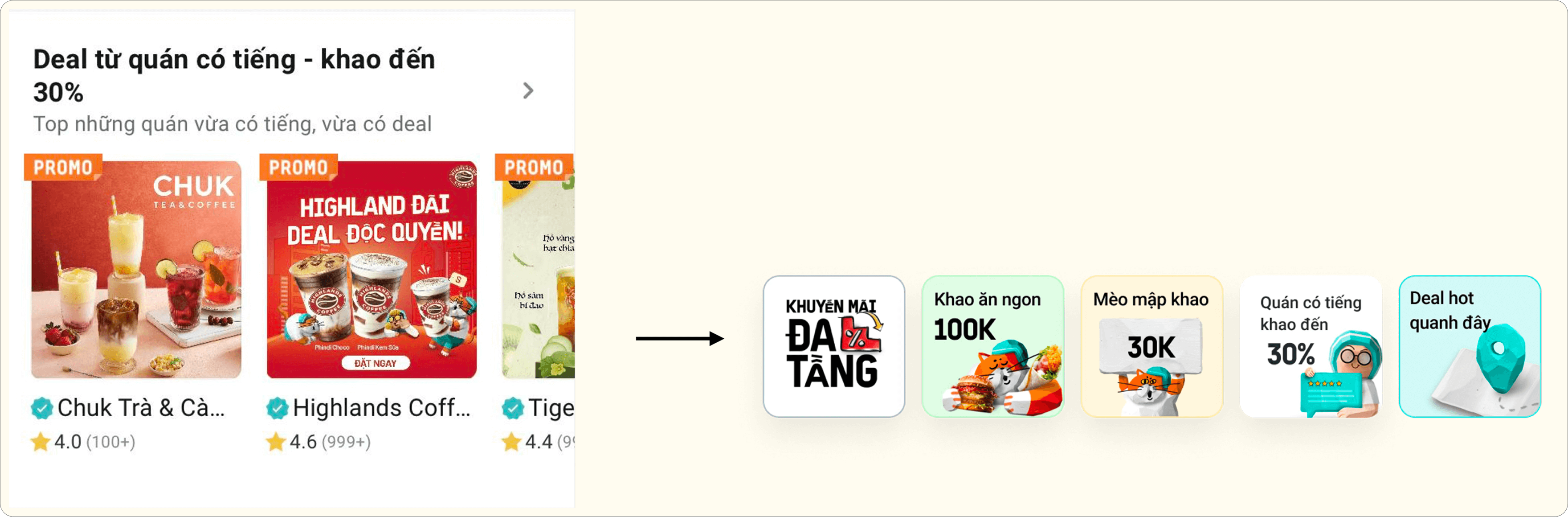
Instead of showing multiple rows of promotion collections, we could consolidate them into clearer, more focused promotional cards. This helps Bargain Hunters quickly find relevant deals without overwhelming other segments.
We introduced manually curated lists based on user needs and contexts such as time of day, special occasions, high-quality restaurants, healthy options, and special merchants. These lists supported Quality Seekers, Health Enthusiasts, and Foodies by presenting more meaningful choices.
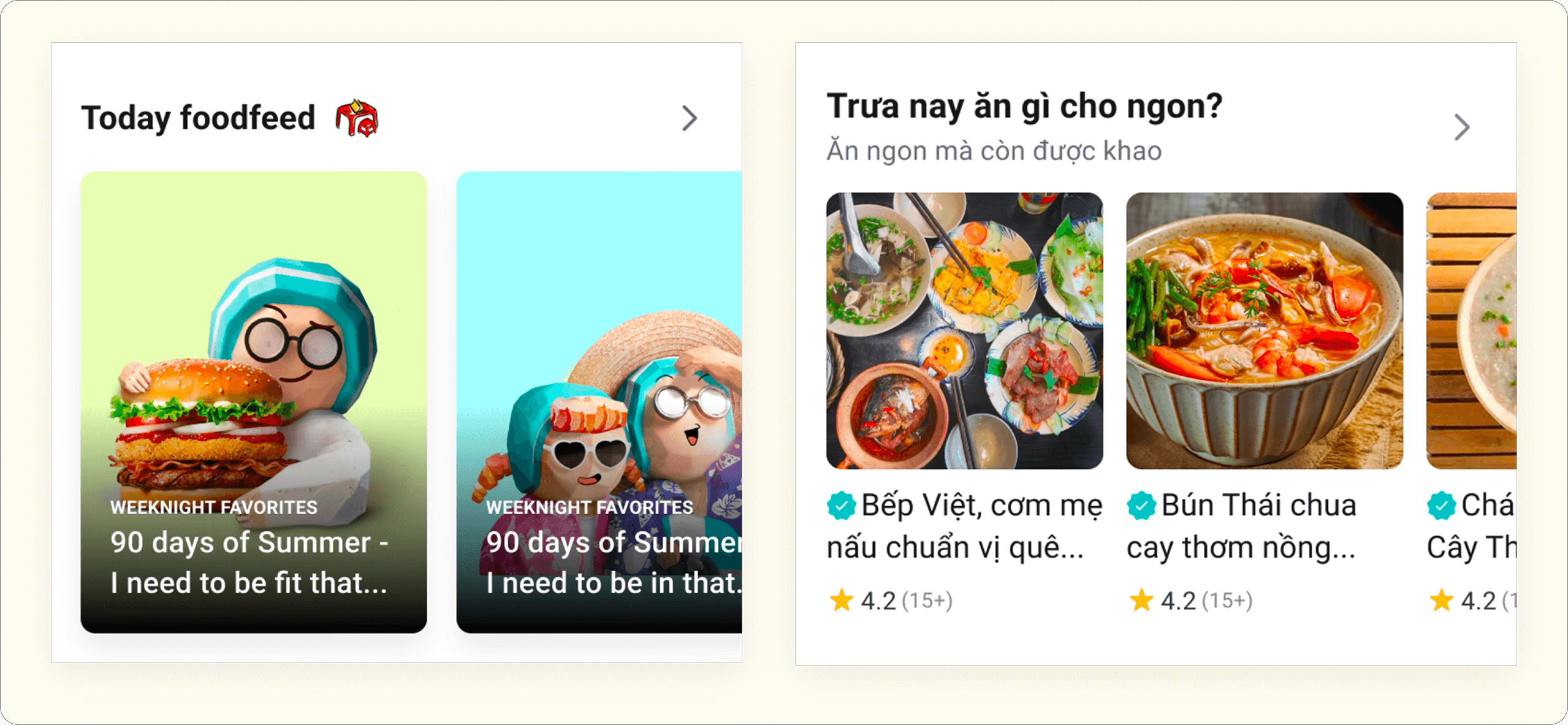
We added filters for distance and curated lists of top-rated, high-quality, and nearby restaurants. This helped Convenience Seekers and Safe Players quickly find familiar or reliable spots.
To fully support personalization and manage multiple business lines, we needed to redesign the Home into a more structured discovery architecture. This meant separating different business verticals into tailored sub-homes, each optimized for user needs and behaviors.
The goal was to create a Home experience that:
Food would be a service, and would be placed together with the other new business expansions.
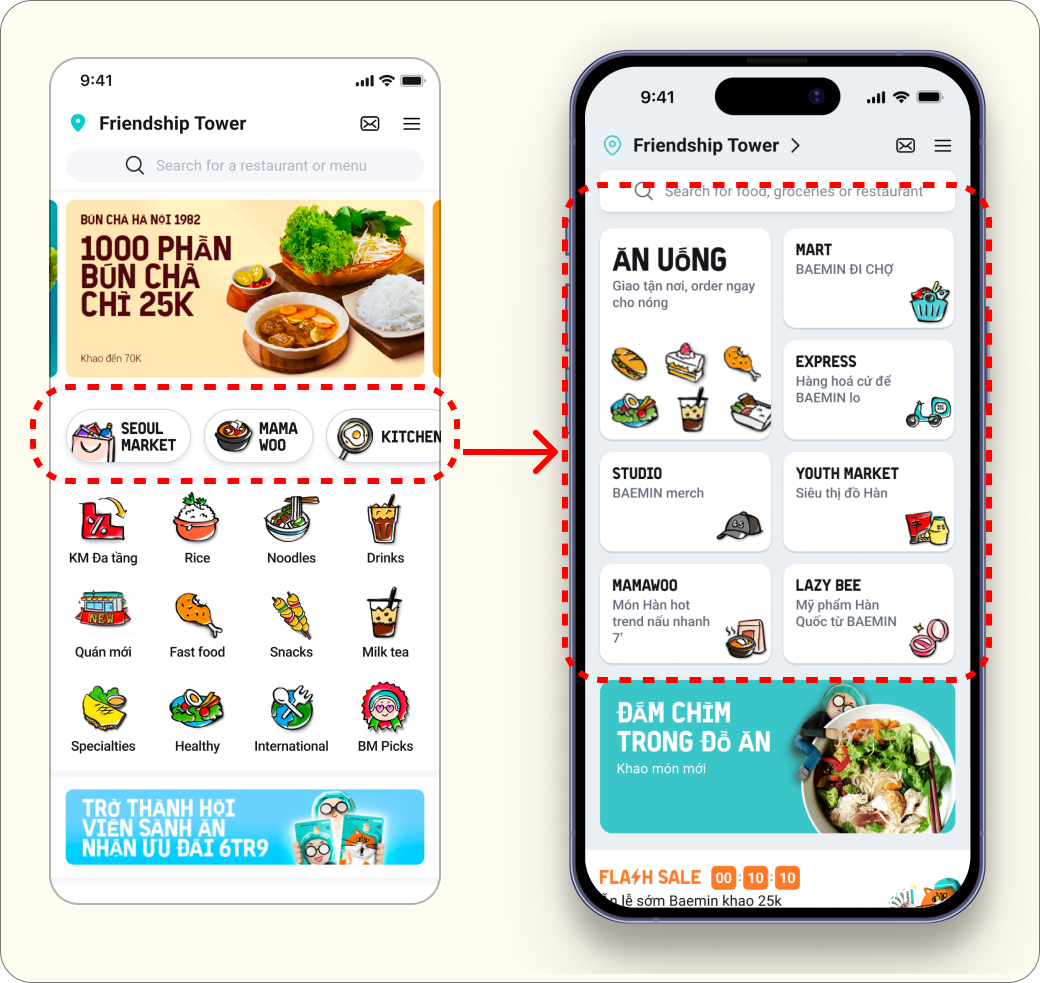
For the new Food Home landing screen, I redesigned the promotional area into a more compact and visually clearer format. This allowed Bargain Hunters; the most promotion-driven segment; to quickly grasp the value of each deal without feeling overwhelmed by repetitive collections.
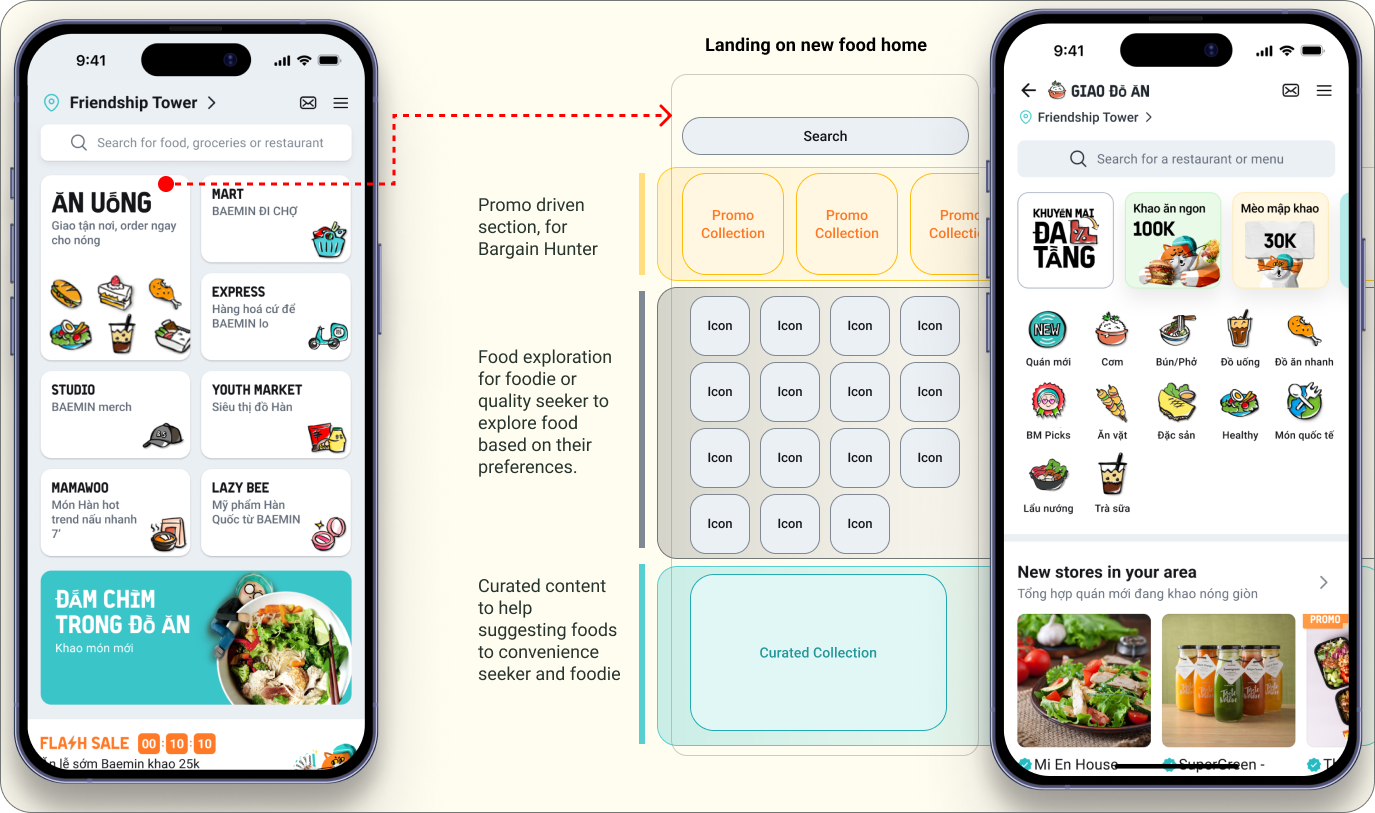
I kept BAEMIN’s signature food category icons as the next section, since data showed this was still the second most preferred way users explored food.
Below that, I introduced a curated food suggestion section tailored to the needs of Foodies and Convenience Seekers, helping them discover relevant options more quickly and with less effort.
Next, I introduced the Shared Investment section, which highlighted partnered brands and co-funded promotions. This placement helped reduce cost per order by driving more visibility to merchants who supported BAEMIN’s discount burden.
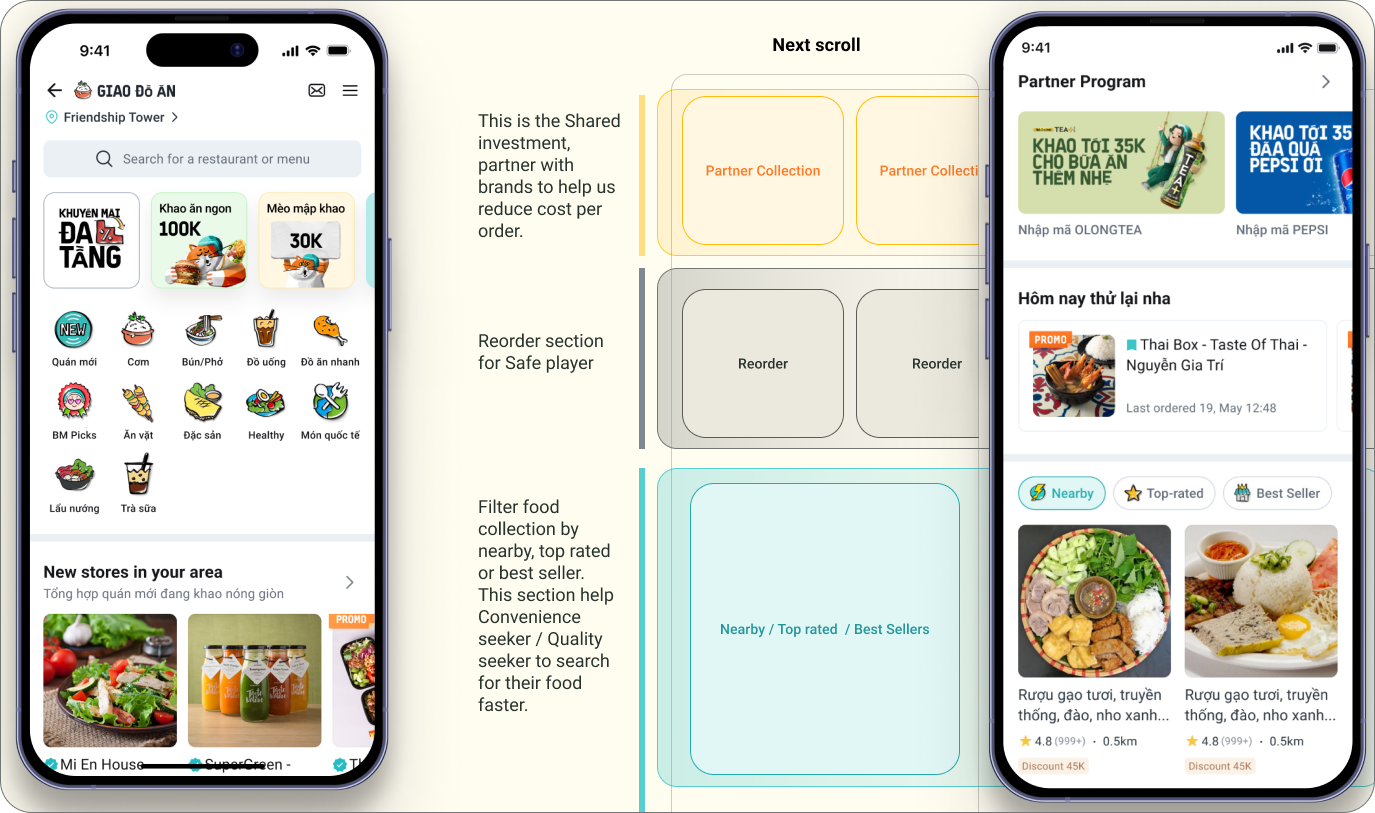
Below that, I added a dedicated Reorder module for Safe Players, giving them a quick way to repeat orders from their favorite restaurants with minimal effort. This directly supported users who prioritize familiarity and speed.
Finally, I designed a utility-driven discovery section featuring filters such as Nearby, Top Rated, and Best Sellers. This helped Convenience Seekers and Quality Seekers quickly narrow down their options and find suitable restaurants without extensive browsing.
After releasing the new Home experience, we reviewed the top-level funnels to understand how the redesign affected user behavior.
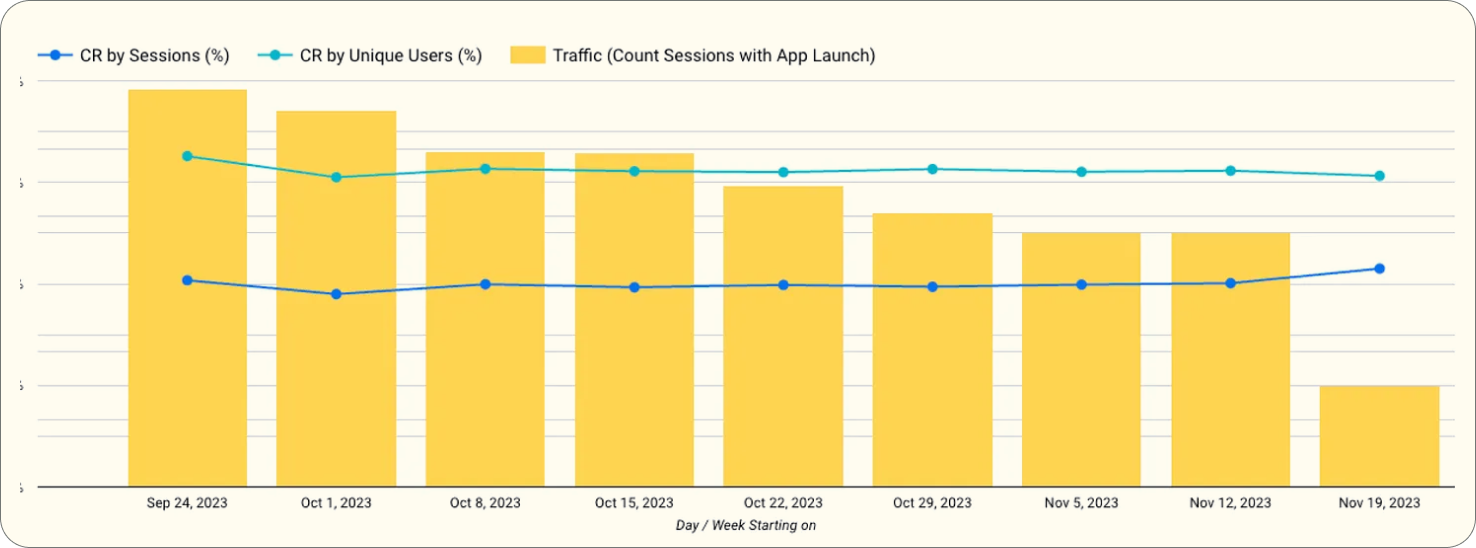
At this time, BAEMIN had already reduced its promotional investment to lower the Cost Per Order (CPO). As expected, this led to an overall drop in traffic, a normal outcome when fewer discounts are pushed into the market.
However, despite the traffic decline, Conversion Rate (CR) remained stable across both sessions and unique users (see chart). This indicates a few important insights:
By the end of 2023, Delivery Hero, the parent company that acquired BAEMIN, decided to shut down BAEMIN’s operations in Vietnam. I wanted to continue tracking the long-term performance of the new Home experience, but with the announcement of the shutdown and the negative effects that followed, it became very difficult to measure the real impact of the design.
After the release, our team shifted the product strategy toward the Quality Seeker segment. This group showed higher spending and better order frequency, which meant more revenue potential for the company. We ran several projections on the segment size, the potential uplift and how long it would take for BAEMIN to reach profitability if we focused mainly on this group. The estimate was at least 1.5 to 2 years, even with aggressive optimization.
Because of that timeline, it was difficult to convince the Investor to continue funding the business in Vietnam.
As I mentioned earlier, the food delivery only model is extremely hard to sustain in the Vietnam market. Competitors like Grab and ShopeeFood benefit from having multiple business lines that can support and subsidize each other. Grab has ride hailing and express delivery. ShopeeFood is backed by Shopee, a strong e-commerce platform. These additional business models help them absorb losses from food delivery and stay competitive. BAEMIN did not have that advantage, which made it much harder to survive in a high pressure, low margin market.
I want to express my gratitude to the incredible team who made this project possible. Our UX researchers Tu Anh, Mai Anh and Phuong Le provided the deep insights that shaped our direction. Our product designers Hoang Anh, Han, Niki, Quynh, Tuan, Quang, Cam, Nguyen and Phuong brought dedication and creativity to every stage of the work. I also want to thank our data scientist Quang Nguyen for turning complex behavioral data into clear guidance, and Han Truong, My Dang and Binh Pham for their support and collaboration throughout the project. This project was only achievable because of the talent and commitment of everyone involved.